
IN AIR aims to open access to three types of airborne vectors: research aircraft, stratospheric balloons and UAVs (unmanned aerial vehicles).
Balloons
IN AIR opens access to three types of balloons :
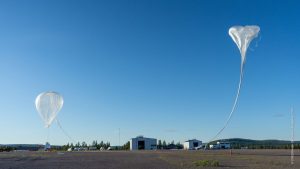
Credit: © CNES/PRODIGIMA/GABORIAUD Romain
Zero Pressure Balloons (ZPBs) can lift up gondolas weighting from 150 kg up to 1 ton near 40 km of altitude. Flights can be accomodated with a series of options : altitude control, telemetry/telecommand and fine pointing system (adapted for flights of large telescopes).
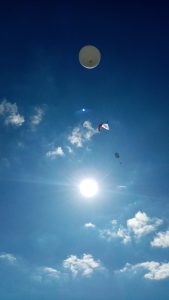
Free-release balloons (SBs) can lift a 3 kg payload for short-duration flights, potentially on alert. The balloon can reach 27 to 33 km of altitude before bursting. The instrument then lands under parachute.
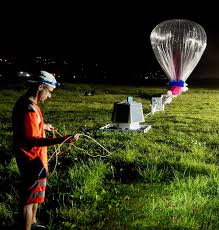
Super Pressure Balloons (SPBs) can operate between 18 and 20 km of altitude for missions up to 110 days. The payload capacity is up to 20 kg. Payloads are powered using a solar-panel system and communication with ground is ensured using Iridium communication system.
Gondolas : During flights, the payloads are integrated in gondolas with weight capacity from 150 to more than 800 kg:
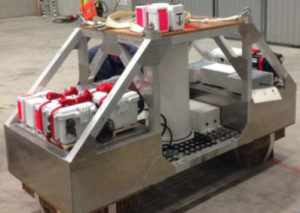
BANA : dimensions : 1m x 0.8 m x 1m
Payload weight : <170 kg
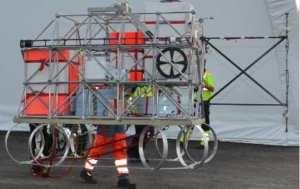
HELIOS : dimensions : 2.1m x 1.4m x 1.4m
Payload weight : <180 kg
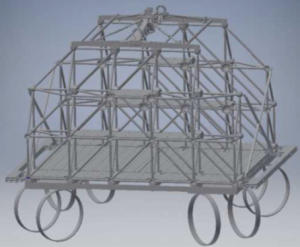
CARMENCITA : dimensions : 2.5m x 1.9m x 2.2 m
Payload weight : <410 kg
Option: pointing and pivoting system.
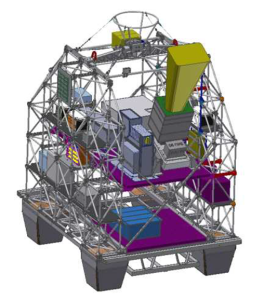
CARMEN : dimensions : 2.5m x 1.9m x 3.0m
Payload weight : <700 kg
Option: pointing and pivoting system.
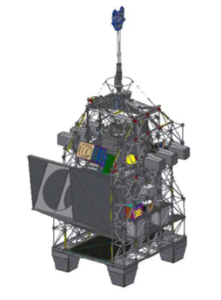
PILOT : dimensions : 2.6m x 2.1m x 3.3 m
Payload weight : <800kg
Fine pointing system : ESTADIUS (adapted for telescopes)
Aircraft
IN AIR opens access to aircraft from the SAFIRE Fleet which includes :
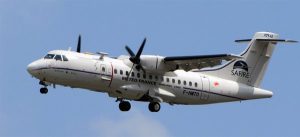
ATR 42 : Able to carry up to 2500 kg of payload.
Typical ceiling : 5000 m, maximal : 7500 m.
Complete description & technical characteristics : here
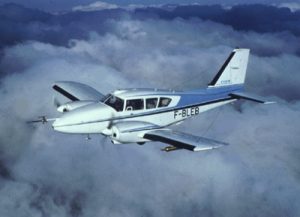
Piper Aztec : adapted for observations in the lower troposphere.
Payload weight : <180 kg
Typical ceiling : 4000 m.
Complete description & technical characteristics : here
ANVOLE : Projet of acquisition for a new jet to replace the Falcon 20 (horizon 2032).
Expected performances : typical ceiling 12 000 m, payload capacity: <1500 kg.
Unmanned aerial vehicle (UAV) :
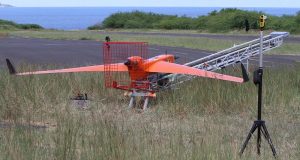
In response to scientific needs, IN AIR is working to develop an access to long-range Boréal UAV.
Boréal UAVs are fixed-wing UAVs with a payload capacity of 8 to 10 kg for missions from 700 to 1000 km, beyond visual line-of-sight (BVLOS). These UAVs have wing span of 4.20 m and can be operated up to 3000 m in altitude, although they are well adapted for boundary layer soundings and near surface observations.
The UAV is launched using a cataplut and land on the belly. It is equipped with a transponder for operation in the airspace. These UAVs have already been used for scientific missions (e.g. EUREC4A, Sargasses monitoring).